
Article: Natural vs. Treated Stones: What to Check Before You Buy
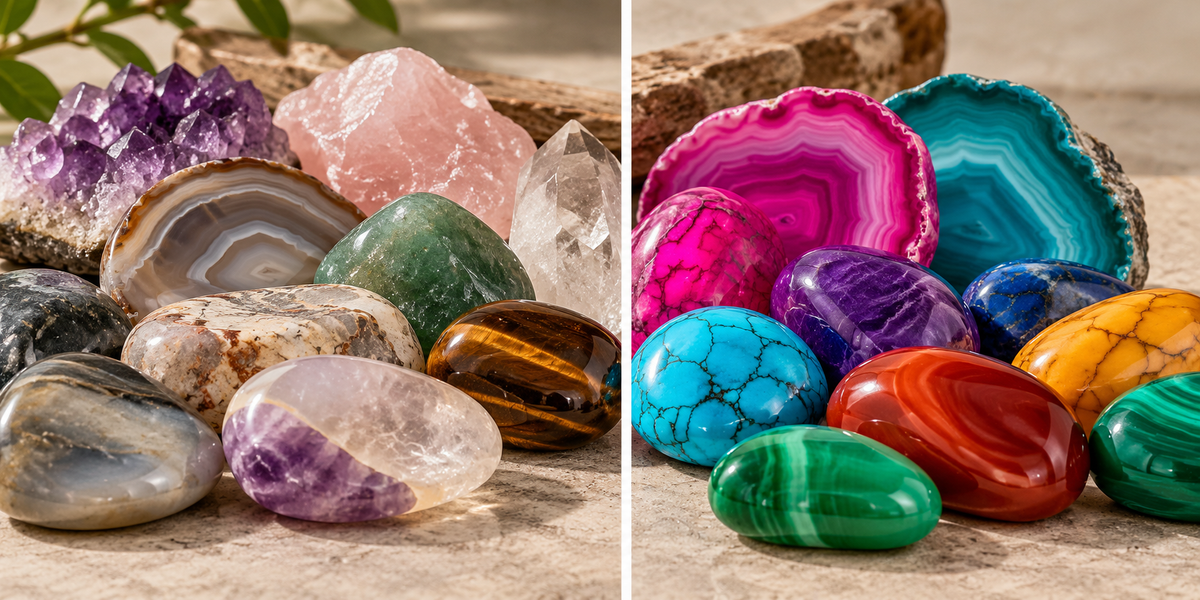
Natural vs. Treated Stones: What to Check Before You Buy
Understanding What's in Your Stone
At Onyx Stones LB, we work exclusively with natural gemstones and mineral beads — meaning every piece originates from the earth, not a laboratory or factory process. That said, the gem trade includes a wide spectrum of treatments and enhancements that can affect appearance and value. Here's what you should know before purchasing any stone, from us or anyone else.
1. Natural Stones: What the Term Means
A natural stone is a mineral or gem that formed in the earth over thousands or millions of years. It is mined, then cut or polished — but its core composition is unchanged by human intervention.
Natural stones may still show inclusions (internal features), color variation, or slight surface irregularities. These are not flaws — they are evidence of authenticity. No two natural stones are identical.
What to look for in our product listings:
- The stone name (e.g., Amethyst, Labradorite, Onyx) is listed as the primary material
- Bead size and shape are specified (round, faceted, freeform, etc.)
- Photos show the actual stone lot or a representative sample
2. Treated and Enhanced Stones
Many gemstones available in the market undergo treatments to improve their color, clarity, or durability. The most common treatments include:
Dyeing
Some stones — most commonly agates, howlite, and quartzite — are dyed to achieve colors that do not occur naturally in that mineral. Dyed stones are real stones with an added color coating or infusion. They are not fake, but the color is not natural to the specimen.
How to spot dyed stones: Look for very uniform, vivid color with no natural variation; color concentrated in cracks or along grain lines; and a price point significantly below what that stone variety would command if naturally colored.
Heat Treatment
Heat is applied to stones like amethyst or citrine to intensify or alter their color. This is extremely common and generally considered an accepted industry standard for those varieties. Heat-treated stones are still natural; the treatment simply accelerates what heat underground might do over time.
Stabilization and Resin Filling
Porous stones such as turquoise are sometimes stabilized with resin to harden them and improve color consistency. Stabilized stones are natural in origin but have been structurally altered.
Coating and Surface Treatments
Some stones are coated — for example, "titanium aura" quartz is natural quartz bonded with metallic vapor to create iridescent effects. The base stone is real; the surface color is not natural to quartz.
3. Simulants: Different Stone, Similar Look
A simulant is a stone that resembles another but is a different material entirely. For example, blue-dyed howlite is sometimes sold as a turquoise simulant. Both are natural minerals — but they are not the same stone. The key is accurate labeling.
We label stones by their actual mineral identity, not by the stone they resemble.
4. What to Check in Any Product Listing
Before purchasing a stone — here or anywhere — inspect the listing for these details:
- Mineral name: Is the stone identified by its actual mineral name (e.g., howlite, magnesite, quartzite) or only by a color-based trade name?
- Treatment disclosure: Does the listing mention dyed, heat-treated, stabilized, or coated? If the color seems unusually vivid or uniform, ask.
- Photos: Are the photos representative of actual stock? At Onyx Stones LB, product photos reflect the stones you will receive.
- Price context: Rare natural stones like high-grade lapis lazuli or chrysocolla command higher prices than their dyed simulant counterparts. An unusually low price for a "premium" stone is a signal worth investigating.
- Seller transparency: A trustworthy seller will clearly answer questions about treatment and material identity.
5. How We Label Our Stones
Every product in our catalog is labeled by its mineral name as we know it from our suppliers. Where a treatment is disclosed to us (such as dyed agate), we include that in the product description. We do not make claims about geographic origin, mine source, or third-party certification unless such documentation accompanies the specific lot.
If you have a question about a specific stone in our collection, contact us directly — we're happy to share what we know about the material.
🔎 New to crystals? Read our Choosing the Right Crystal: A Beginner's Checklist for a practical starting point before your first purchase.


Leave a comment
This site is protected by hCaptcha and the hCaptcha Privacy Policy and Terms of Service apply.